The community would announce a gathering of concerned and impacted citizens. The key difference is that people voted for what they knew about and associated with rather than vote for a person based on his personality.
Any Sikh can call for Sarbat Khalsa. No formal approval from any authority is required. The issues to be discussed are announced as well e.g. what to do about yearly floods.
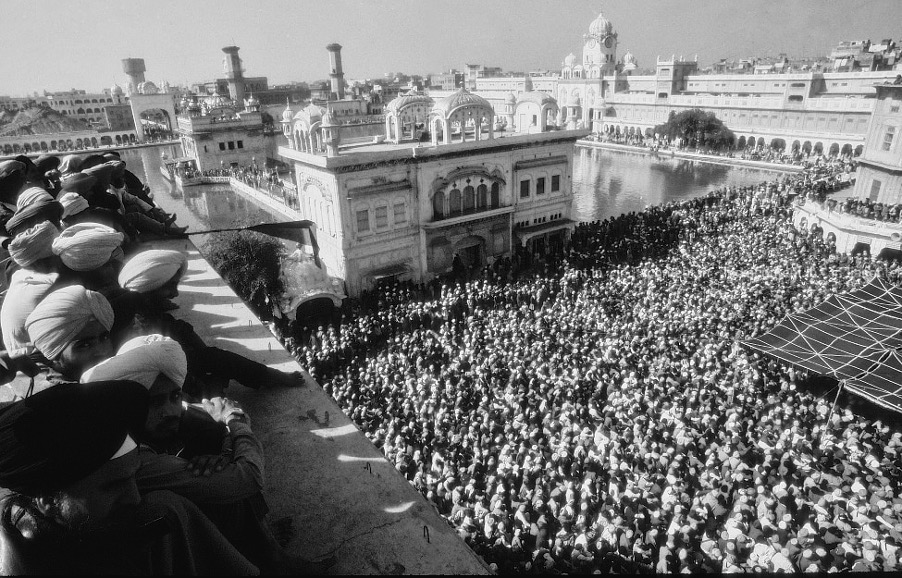
People would gather at the specificized place and time. Issues and options would be discussed and debated. Most participants were armed. All discussions and decisions were taken in the open instead of behind closed doors.
Debate and discussion were repeated till consensus (general agreement) reached.
After there was consensus, the gathering would choose around five men to implement those decisions. There could be multiple groups of five people chosen for multiple issues. Those chosen could count on support of most.
The advantages of this approach are:
Only those who were directly concerned or impacted would vote. This is in contrast to people voting on issues that have nothing to do with them.
It is issues-based democracy rather than party and personality-based democracy.
Multiple groups of around five people were chosen for multiple tasks instead of one representative with unlimited power and no right to recall.
Representatives could be recalled 'the next day' in the next Sarbat Khalsa. Contrast this with no recall for 4-5 years in modern representative democracy.
Larger issues that impacted large section of the population would result in gathering at Akal Takht It is issues-based democracy rather than party and personality-based democracy.
Multiple groups of around five people were chosen for multiple tasks instead of one representative with unlimited power and no right to recall.
Representatives could be recalled 'the next day' in the next Sarbat Khalsa. Contrast this with no recall for 4-5 years in modern representative democracy.
Decisions for other larger issues for which average everyday people would not have the knowledge were taken by the administrators. E.g. foreign relations, how to deal with developments at the border and in neighboring region, or pollution standards.
There are several examples in Sikh History and in current times of Sarbat Khalsa being called and decisions taken with involvement of concerned and impacted citizens.
Sarbat Khalsa is in active use for making community level and religious decisions.