There is lot of misunderstanding and deliberate confusion about this treaty.
The treaty is cited in modern border disputes (e.g. Aksai Chin), as evidence of historical Ladakh suzerainty to Sikh Kingdom (Khalsa Raj), while China emphasizes suzerainty over Tibet.
"The terms were also summarised in the Ladakh Chronicles as follows. Tibet recognised that Ladakh was annexed to the Sikh Empire. And the Sikh Empire relinquished the ancient Ladakhi claim to western Tibet. Both sides would remain within their own territories. Biennial Lopchak missions would go on as before. Ladakhi merchants would be allowed to travel to Rudok, Gartok and other places in Tibet and the Tibetan merchants from Chang Thang would be allowed to go to Ladakh" (Treaty of Chushul, Wikipedia).
History
In the 19th century, Ladakh was the hub of trade routes that branched out into Central Asia and Tibet. Its trade with Tibet was governed by the 1684 Treaty of Tingmosgang.
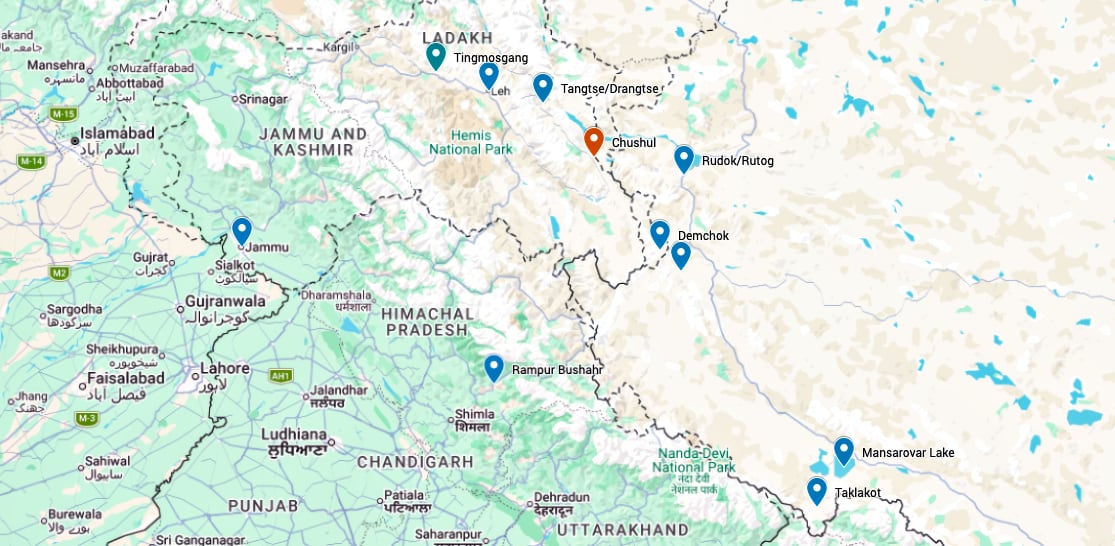
Under this treaty, border between Ladakh and Tibet will be demarcated at the Lhari Stream (Charding Nullah) near Demchok (see map below).
Ladakh got the exclusive right to receive the pashmina wool produced in Western Tibet. World famous Kashmiri Pashmina shawls were made with this Pashmina wool from Ladakh.
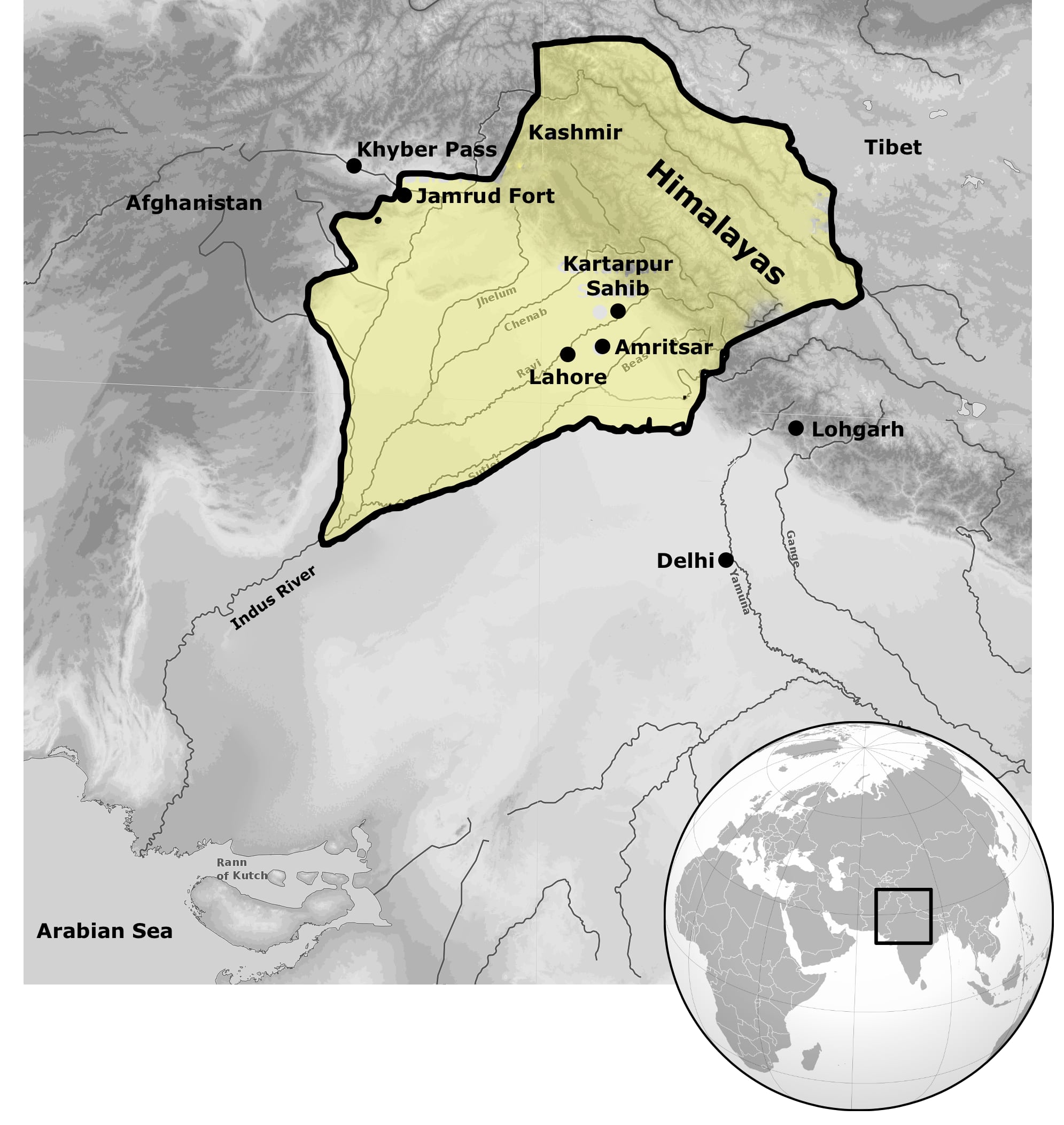
In the early 1800s, the Kashmir Valley and the adjoining Jammu region were part of the Sikh Kingdom (Khalsa Raj) of Maharaja Ranjit Singh. The Dogras of Jammu were virtually autonomous under the rule of Raja Gulab Singh.
The governance of Ladakh had deteriorated. This led to feudal clashes. The people appealed to the Governor for help but were treated with 'contempt'. This affected the trade of lucrative Pashmina Wool, Tibetan Salt, and Tea from Tibet into Kashmir, Jammu, and Punjab. In 1834, Gulab Singh sent his ablest general and Kishtwar governor, Zorawar Singh, to take control of all the territory between Jammu and the Tibet border, leading to the conquest of Ladakh and Baltistan. Baltistan is the region between Gilgit in the West, and Ladakah in the East. Baltistan is northern part of Kashmir.
General Zorawar Singh conquered Ladakh to bring stability to the region. General Zorawar Singh built a military fort in Leh (capital of Ladakh). It is still standing and is a military museum (Ladakh Tourism, 2026).
"The hostilities and subsequent disorders attending his conquest of Ladakh had permitted the British to divert the shawl-wool trade to [Rampur-] Bashahr - a state of affairs that Gulab Singh could not long afford to tolerate... Gulab Singh’s chief objective in the conquest of Ladakh and Baltistan had been two-fold: to encircle the Kashmir valley - in anticipation of the day when the dissolution of the Sikh empire would permit him to claim Kashmir as well as Jammu - and to gain access to the lucrative wool trade that normally flowed from the plains of northwestern Tibet (Chang Tang) through Ladakh to the looms of Kashmir" (Fisher, Rose & Huttenback, 'Himalayan Battleground', 1963, p. 55).
It was both geopolitics and economics that triggered the war.
War: Several battles were fought. General Zorawar Singh was killed at Battle of Toyo near Taklakot (December 10-12, 1841). A modest samadhi (memorial), known locally as chorten was built. It is likely just a heap of stones. The Dogra forces retreated. A final battle was fought at Chishul (September 1842). Then the treaty was signed. Under this treaty, border between Ladakh and Tibet will be demarcated at the Lhari Stream (Charding Nullah) near Demchok (see map below).
Ladakh got the exclusive right to receive the pashmina wool produced in Western Tibet. World famous Kashmiri Pashmina shawls were made with this Pashmina wool from Ladakh.
In the early 1800s, the Kashmir Valley and the adjoining Jammu region were part of the Sikh Kingdom (Khalsa Raj) of Maharaja Ranjit Singh. The Dogras of Jammu were virtually autonomous under the rule of Raja Gulab Singh.
The governance of Ladakh had deteriorated. This led to feudal clashes. The people appealed to the Governor for help but were treated with 'contempt'. This affected the trade of lucrative Pashmina Wool, Tibetan Salt, and Tea from Tibet into Kashmir, Jammu, and Punjab. In 1834, Gulab Singh sent his ablest general and Kishtwar governor, Zorawar Singh, to take control of all the territory between Jammu and the Tibet border, leading to the conquest of Ladakh and Baltistan. Baltistan is the region between Gilgit in the West, and Ladakah in the East. Baltistan is northern part of Kashmir.
General Zorawar Singh conquered Ladakh to bring stability to the region. General Zorawar Singh built a military fort in Leh (capital of Ladakh). It is still standing and is a military museum (Ladakh Tourism, 2026).
"The hostilities and subsequent disorders attending his conquest of Ladakh had permitted the British to divert the shawl-wool trade to [Rampur-] Bashahr - a state of affairs that Gulab Singh could not long afford to tolerate... Gulab Singh’s chief objective in the conquest of Ladakh and Baltistan had been two-fold: to encircle the Kashmir valley - in anticipation of the day when the dissolution of the Sikh empire would permit him to claim Kashmir as well as Jammu - and to gain access to the lucrative wool trade that normally flowed from the plains of northwestern Tibet (Chang Tang) through Ladakh to the looms of Kashmir" (Fisher, Rose & Huttenback, 'Himalayan Battleground', 1963, p. 55).
It was both geopolitics and economics that triggered the war.
Sikhs today have excellent relations with China. Chinese Ambassadors visit Darbar Sahib (Literally court of God), the holiest shrine of the Sikhs. Chinese Ambassador Sun Weidong visited in November 2019. Ambassador Luo Zhaohui visited in August 2018. Ambassador Le Yucheng visited in March 2015. China also add Punjabi language courses to its university (Tribune, 2026).
The treaty is important as evidence of historical Ladakh suzerainty to Sikh Kingdom (Khalsa Raj), while China emphasizes suzerainty over Tibet.
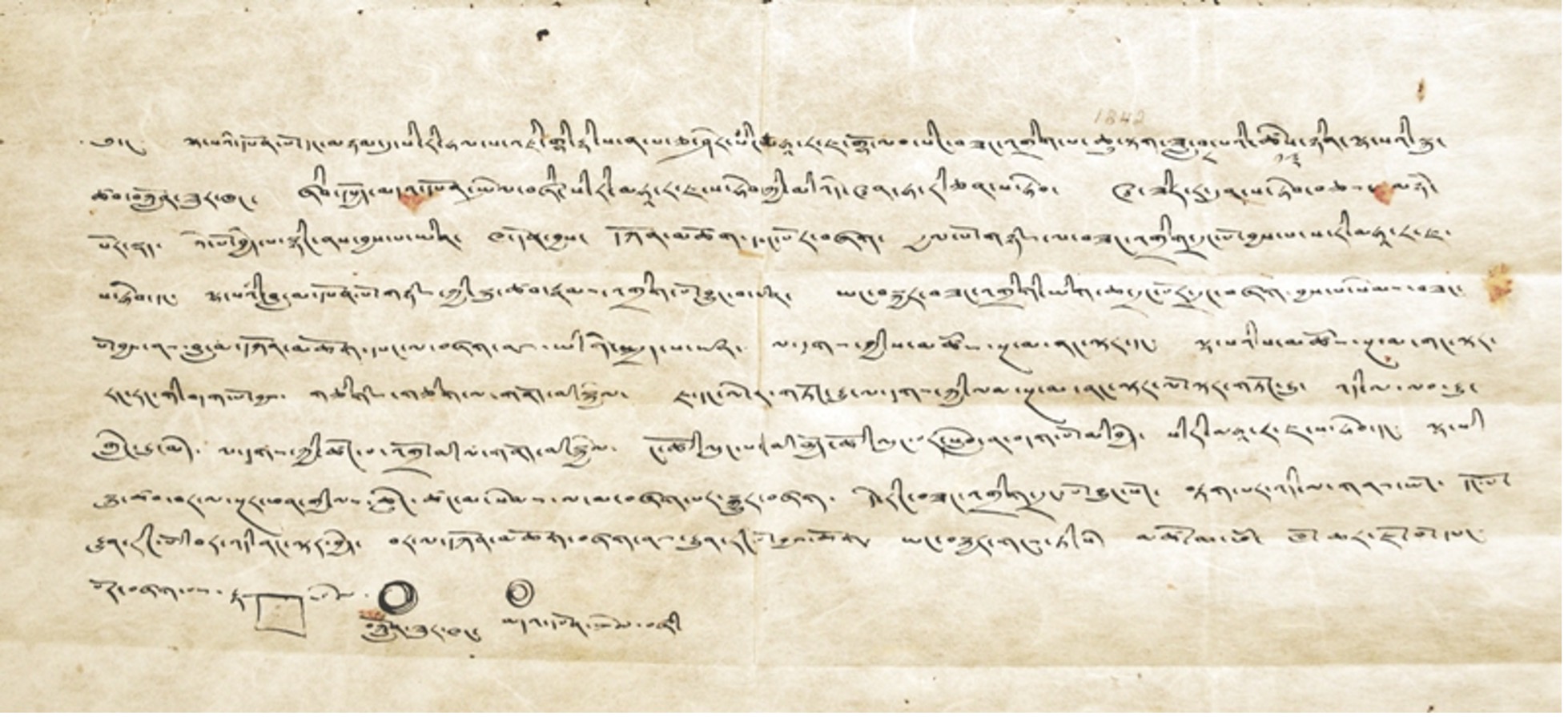
English translation of the Treaty is at Tibet Justice website and many books.
Crossroads Journal Volume 1, Issue 2 (June 2026) has detailed study of the Sino-Sikh Chushul Treaty 1842.